“Happiness is the meaning and the purpose of life, the whole aim and end of human existence.”
- Aristotle
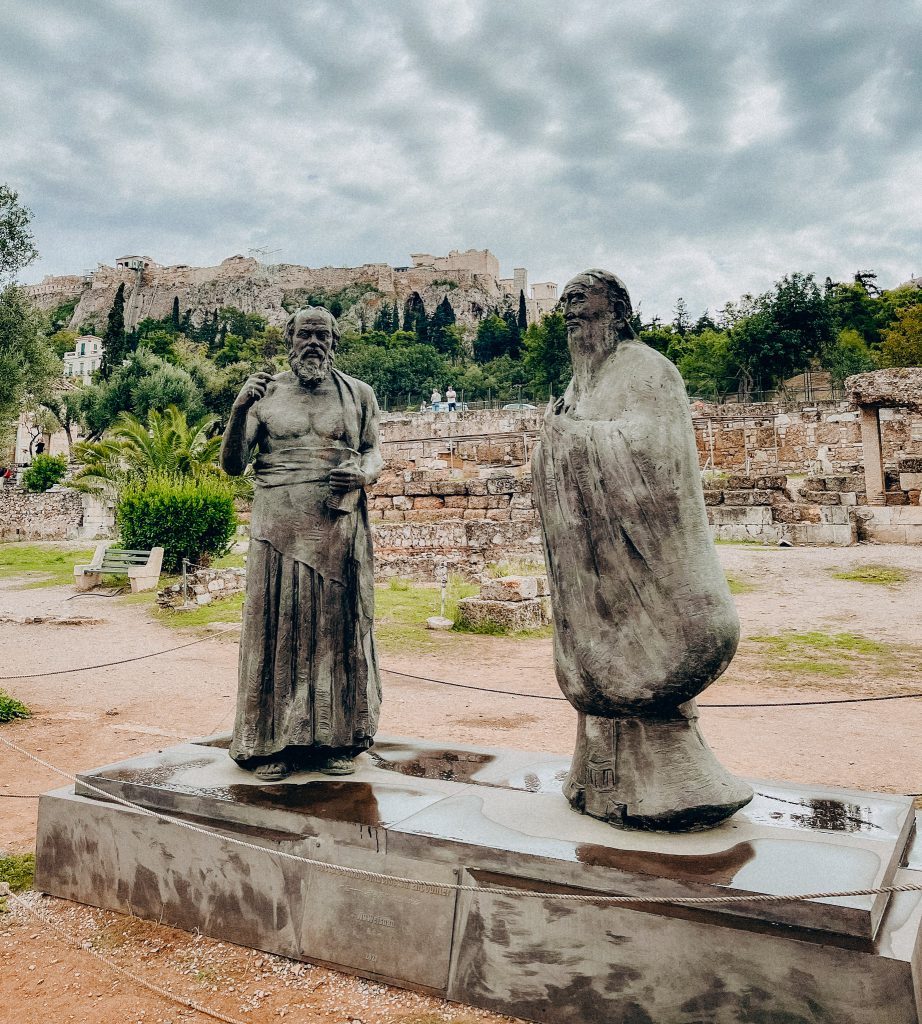
A few weeks ago, I visited Athens for work. Before heading back, I walked around the city center and found a monument of Socrates and Confucius the middle of the Agora. It’s not ancient—it was a gift from the Chinese government—but standing there, surrounded by so much history, I couldn’t stop wondering what happened to the world. We still remember the great thinkers of the past, yet it feels like thinking has become a rarer human activity.
Don’t get me wrong, we all think. But even I notice that much of my thinking has become mostly pragmatic, even by Aristotle’s standards. Thinking about the big questions of our existence and our place in the universe—the kind of thinking that led to so many discoveries—has oddly become a luxury in a world full of easy-to-access information. Isn’t that ironic?
Looking back at how the ideas of Aristotle and Confucius shaped our society made me realize how powerful the act of thinking is—not because the outcome is a set of interesting ideas with value on their own, but because thinking itself is an act of self-reflection and purpose. For me, many modern issues born from our harshly competitive society relate to a lack of purpose in what we do. They reflect the idea that sacrifice doesn’t pay off on a personal level because “nothing matters” in the end. I refuse to accept that pessimistic view.
We aren’t born with a purpose, but we have the power to define one. That’s my commitment: think more—and think more about how the way I observe and approach life gives me purpose. I wish we could return to a time when thinking was admired as a path for society. But for better or worse, society has irreversibly changed. Still, thinking can remain a personal journey that brings satisfaction—and maybe, with that, every new creation can carry its own purpose.