Product Development Tool 1.0
This tool was built to address company needs for Software Development process alignement as well as improve communication for remote small teams, and address overcosts related to quality.
#01
Problem
After researching, there was a direct relationship between the cost of building software and the quality of the communication. Misunderstood solutions had a higher chance of result into more bugs and delays.
Hypothesis
Build a layout that can put emphasis on visual communication and tools that can help to communicate solutions as visually and fast as possible by providing detailed and interactive information to developers (and stakeholders). This could generate and improve the shared understanding of the solutions, and therefore, reduce number of bugs related.
Results
We replaced all related tools the company used for the communication of solutions (inVision, Pivotal Tracker, Abstract and Notion). The process of wrapping solutions turned to be more efficient as well an improvement in the efficiency and proficiency of the teams by reducing the cases of missing deadlines and higher stakeholders satisfaction.

A layout that facilitates construction and understanding of solutions
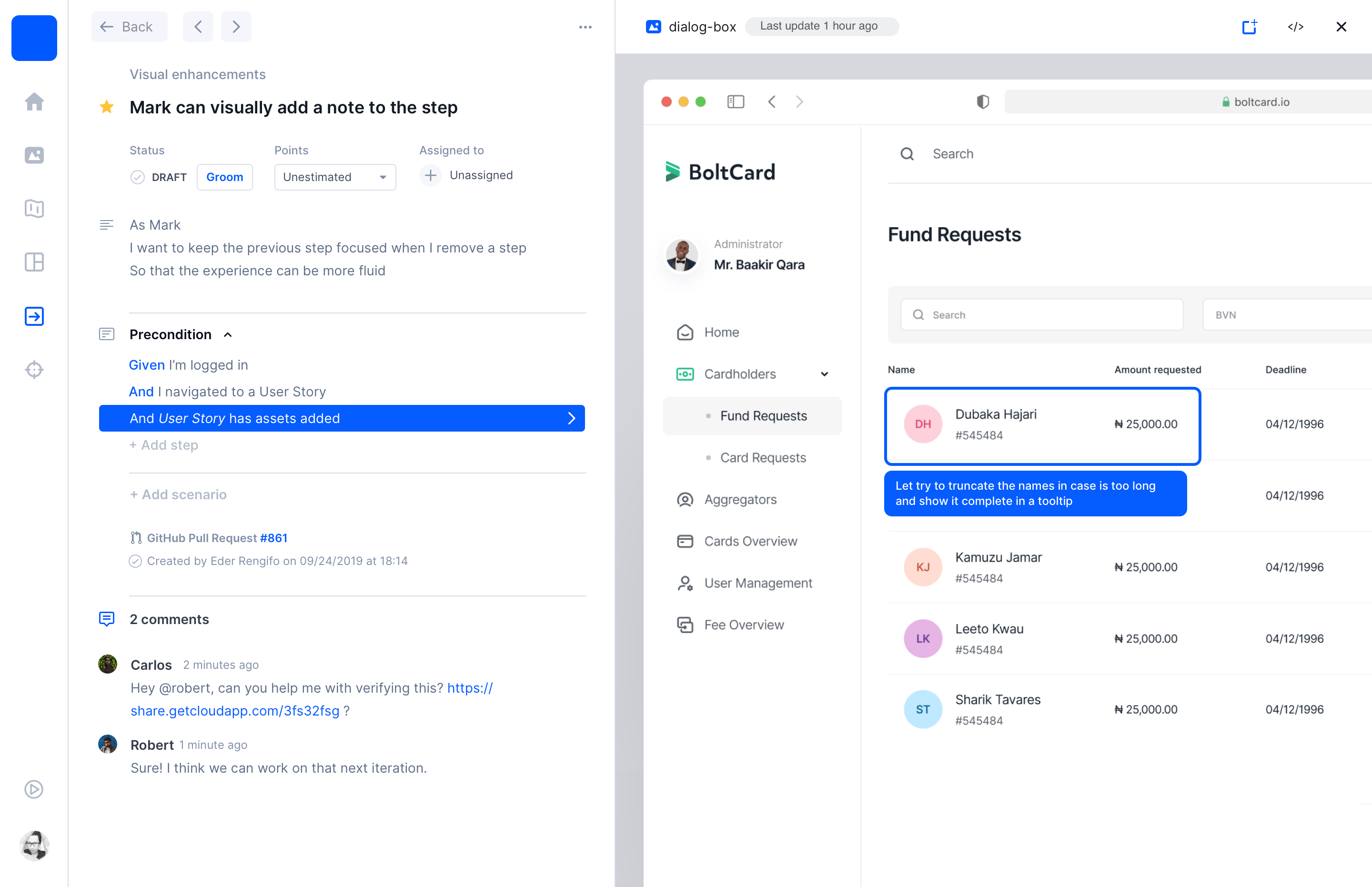
The layout allowed to connect instructions (steps) with visuals in an interactive way.
#02
Problem
The company expected to connect roadmaps with company milestones tracking tools, so that it can be easier to follow up progress and identify overcosts.
Hypothesis
Build a Roadmap for product management that can allow Product Managers to plan work, but also that can communicate progress automatically in a visual way consuming data generated daily from the teams.
Results
The Roadmap replaced any other tool Product Managers used before, like a diversity of spreadsheets which made difficult the communication of progress across teams. They reduced their time spent in reporting results, and the company head was able to have a better visibility of each team's work.
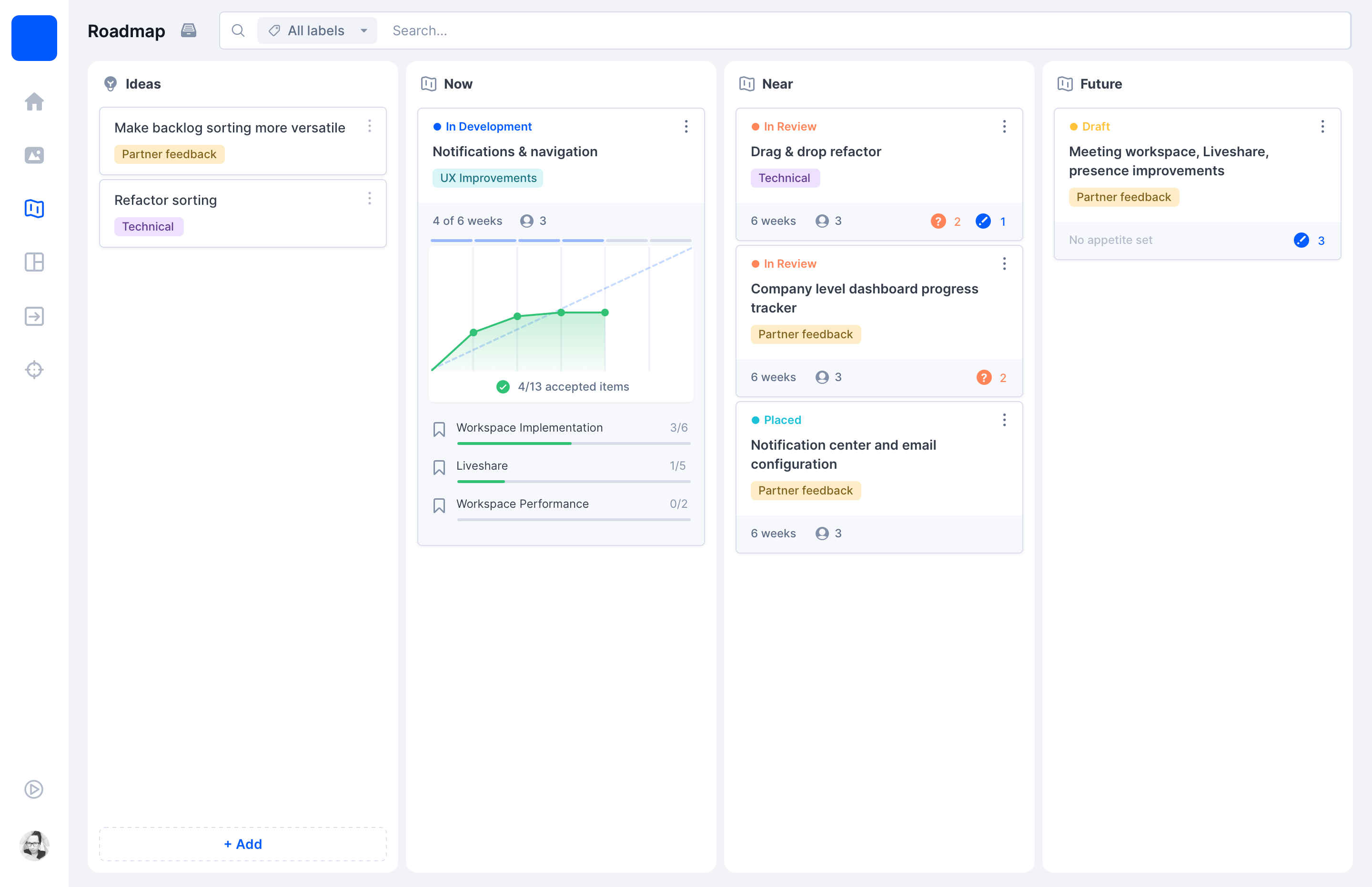
The Roadmap worked as a higher level board, allowing teams to plan but also report progress automatically.
#03
Problem
The company was experimenting with Agile methodologies, but it could not find a product that can allow teams to be focused on ongoing and future work as it was expected for them to be more involved in early stages of the process.
Hypothesis
Build areas of work for teams based on "what is happening this week” and "what should happen the next one”, teams can be able to improve their knowledge of future work, provide inputs at the same time they continue being focused on current work.
Results
Team used actively Current environment for their daily work (especially during standups) as well as Next to discuss future work during Backlog Grooming sessions, both environments turned into useful prompts to generate open discussions among different roles.
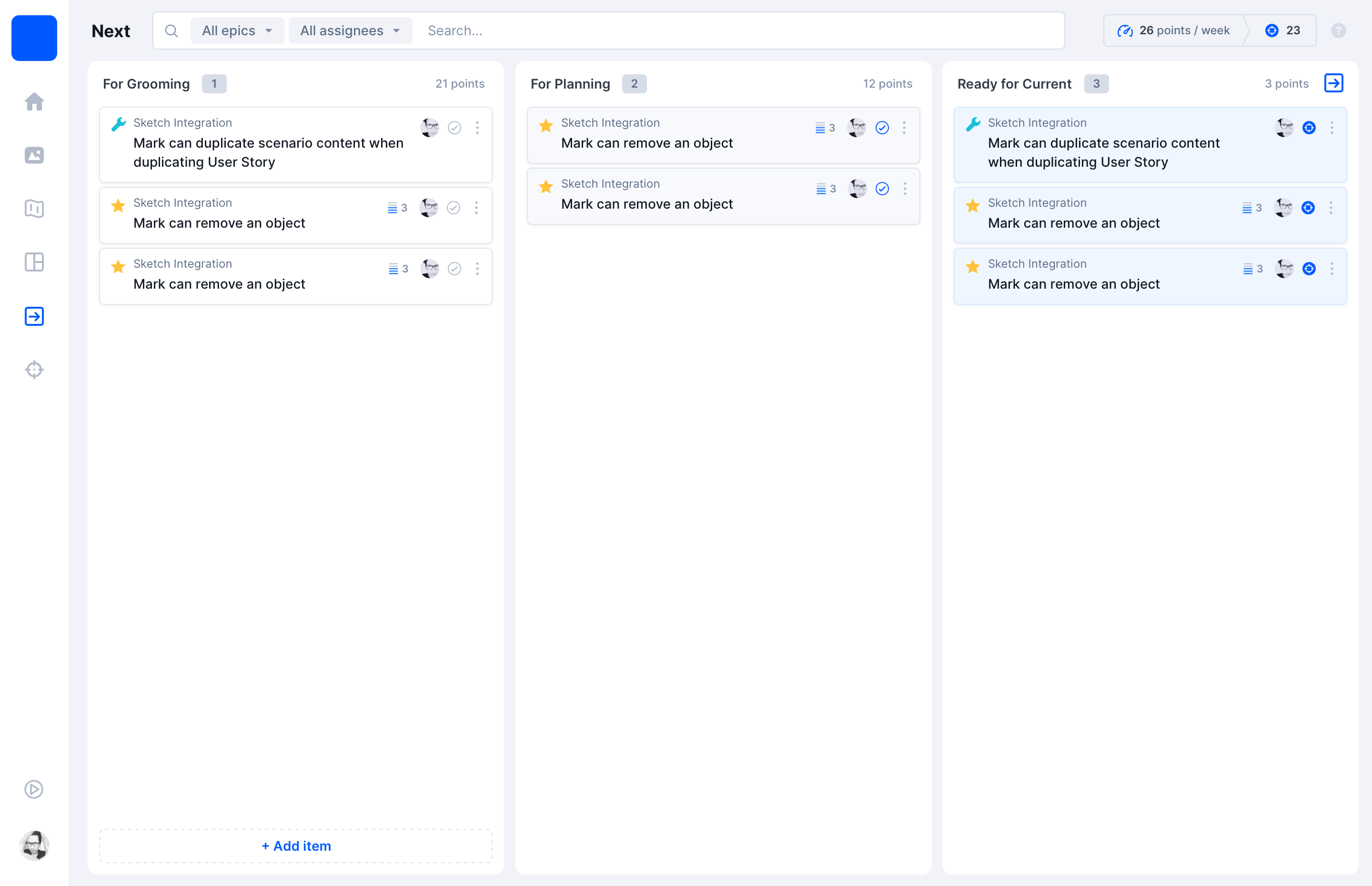
Environments were focused on use cases. This one allowed the team to discuss future work to address
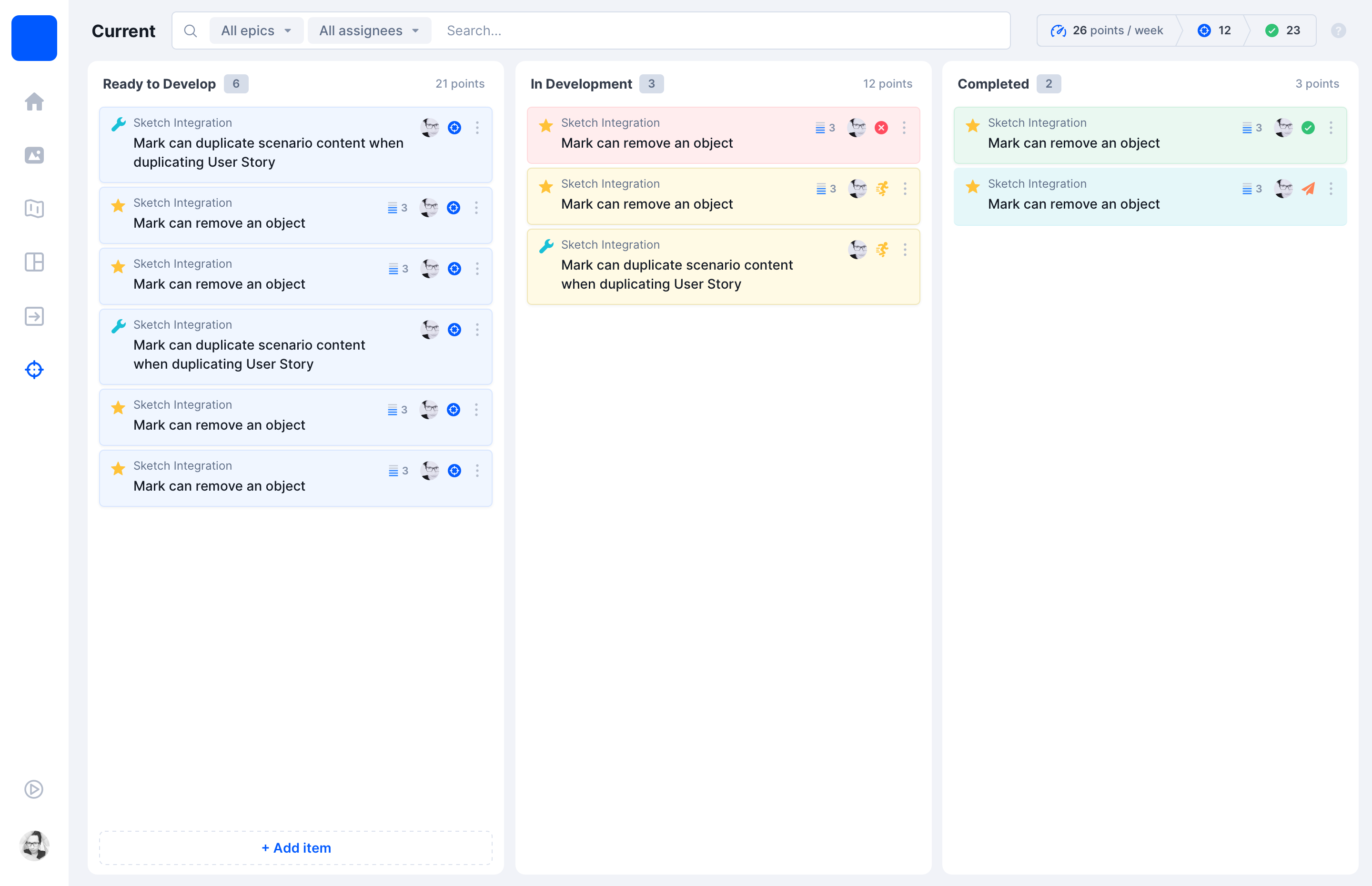
... and this one was focused on ongoing development work.
CONTACT
rengifo.eder@gmail.com | @ederrengifo